What Actually Happens in Couples Counselling? A Realistic Guide for First-Timers
Sitting across from a stranger and being asked to describe your relationship while your partner sits next to you — it’s an odd thing to agree to. And yet people do it, usually after months of circling the idea and talking themselves out of it.
The apprehension is understandable. It’s also, in most cases, worse than the reality.
The First Session Is More Like an Interview
Your therapist is gathering information. They want to understand how the two of you function together. This includes the shape of your arguments, who pursues and who withdraws, how long the silences last after something goes wrong. You’ll probably be asked how long you’ve been together, when things started to feel different, what you’re hoping to get out of being there.
Neither of you will leave with anything resolved. That’s not what the first session is for.
Some therapists see each partner individually at some point early on. It gives people space to say things they might soften in front of their partner — not secrets, necessarily, but context. How you grew up. What you saw modelled as normal.
Why the Type of Therapist Matters
A psychologist has completed at minimum six years of postgraduate clinical training. That’s not a credential to be snobbish about — it has practical implications for what they can actually do with you in the room.
Relationship difficulties rarely exist in isolation. One partner might be managing anxiety that makes conflict feel catastrophic. The other might have a pattern, developed long before this relationship, of shutting down when things get hard. A psychologist is trained to identify and work with those individual psychological factors alongside the relationship dynamic itself. A general counsellor may be experienced and effective, but that dual focus isn’t always within their scope.
Honestly, a lot of couples don’t know to ask about this when they’re booking relationship counselling. It’s worth asking.
What the Middle Phase Actually Feels Like
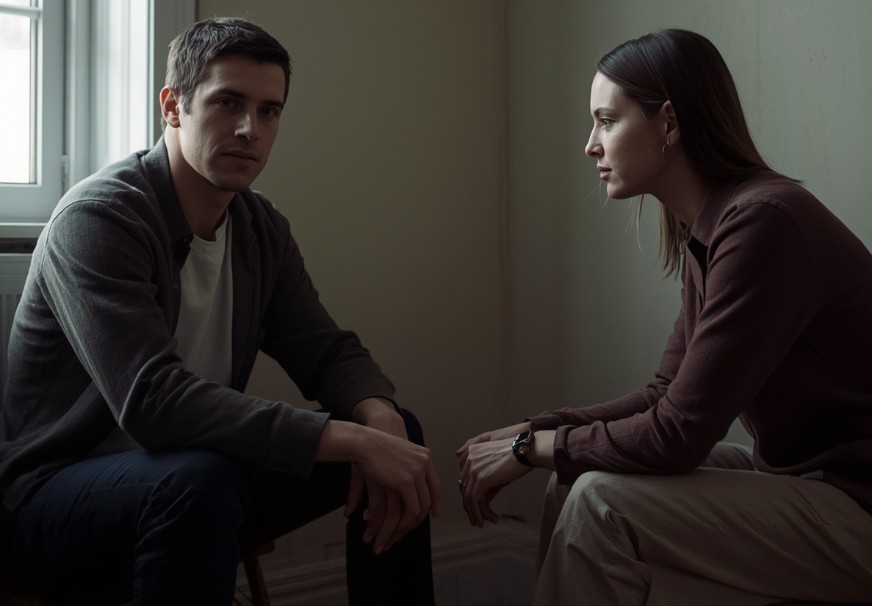
Once the assessment phase is done — usually after a few sessions — the work changes character. The therapist has enough of a map now. Sessions start to involve more direct intervention: stopping a conversation mid-sentence to name what’s happening, pointing out the moment one person checked out, asking why a particular comment landed the way it did.
It can feel exposing. Most people find the middle stretch harder than they expected, not easier.
A session that leaves you both quieter than when you arrived isn’t necessarily a bad one. Progress in this kind of therapy is slow and rarely feels like progress while it’s happening. Eight to twelve sessions is a rough frame for when couples tend to notice real shifts — but that assumes both people are actually working, not just attending.
Around 75% of married Australian couples with children reported serious problems in their relationship, but only 8% had sought counselling.
The Part Nobody Mentions
There’s a version of couples counselling where one person comes in determined to have the therapist confirm they’re right. It doesn’t work like that, and the therapist won’t play along.
What the process actually asks of both people is a specific kind of flexibility — not about the facts of what happened, but about what those facts mean. The story you’ve built about your partner’s behaviour, their intentions, what they’re really saying when they go quiet. Some of that story is accurate. Some of it is filling in gaps with old material that has nothing to do with them.
That’s genuinely difficult to sit with. It’s also where most of the useful work happens.
Couples who come in early — before the resentment has had years to calcify — tend to find the process faster and less painful. Most wait far longer than they should. If you’re reading this and wondering whether things are bad enough to warrant it, they probably are.